Commissioning a Bronze Statue
Question: Why should we invest in Fine Art, made of bronze, in the first place?
So glad you asked.
Answers:
1. Other than an annual waxing bronze statues are completely maintenance free!
2. Bronze art lasts outdoors, for literally, hundreds, even thousands of years.
3. Bronze statues withstand hailstorms, kids climbing on them, floods, tornadoes (if installed properly), and all animals indigenous to North America.
4. Other than gold, sculptures made of cast bronze embody the greatest integrity of all castable metals "known to man." So to invest in these tangible objects of beauty is a solid investment.
5. Bronze statues not only hold their value but always appreciate over time (especially after the sculptor's death)!
Where to Begin When Selecting a Bronze Sculpture Artist
The process for commissioning bronze Fine Art,
in 12 simple steps:
1. Contact
2. Paperwork
3. 1/3 Deposit
4. Design & Model Production
5. *Minor Changes/Adjustments to Model
6. Final Approval of Small Scale Model
7. Next 1/3 Payment Due
8. Produce Bronze Sculpture
9. Inspect and Approve
10. Final Payment Due
11. Delivery of Sculpture to Site
12. Satisfaction Guaranteed
*Our Change Order Policy: https://docs.google.com/document/d/1awpsdY_iezNxKDBPyXxquFLAncRoeG9ojMlrlVGEjN0/edit?usp=sharing
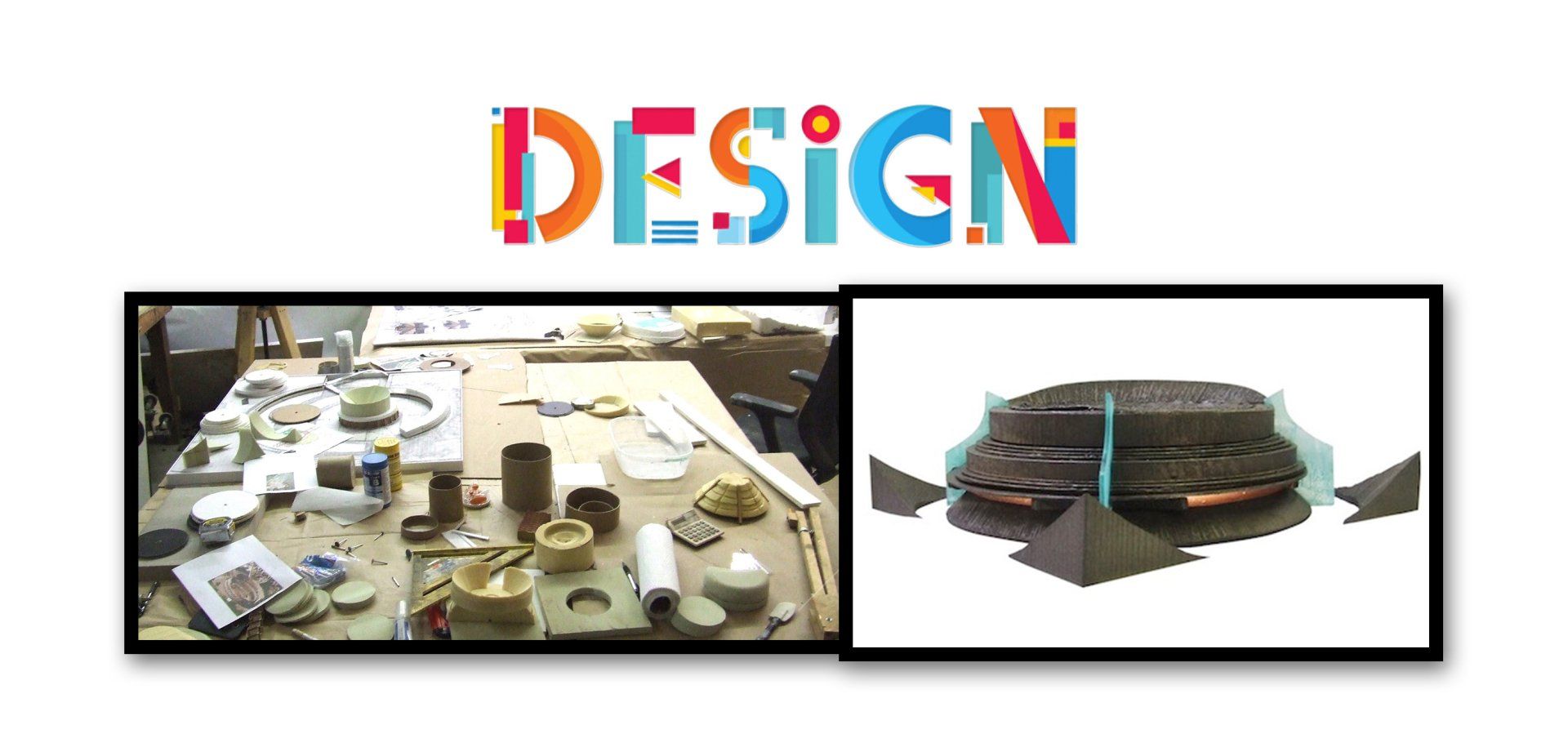
Professional statue design is crucial. Let's take this project, as a simple example of sensible and professional design. As you can see in these behind-the-scenes photos, we obviously worked through a number of physical, 3-d statue base designs until we came up with the best of the best. We are sort of old fashioned that way. There is just something about designing prototypes with real life, physical materials, as opposed to computer design, that has contributed to our continued success. (Sort of like the difference between an in-person meeting and a virtual meeting).
A virtual meeting is quicker, cheaper, and certainly more convenient, but there is no substitute for a real life, eyeball-to-eyeball meeting. Similarly, there is no substitute for a small scale model our clients can inspect on a table and touch with their hands, in three dimensional space. No illusions. Inspected in physical space, in the round. No room for error.
Design.
Design.
Design.
As an example, the above seven-foot-diameter bronze and glass outdoor pedestal design that we created for Papa John's International called for four thick tempered glass panels, each internally lit with LED lighting. Additionally, the internal lighting system spills out between the tiers for seductive nighttime allure. Moreover, our sleek, curvilinear contemporary bronze bollard design (outer perimeter) not only compliment the overall design they protect the bronze from stray cars in nearby traffic and also offer little personal nooks for folks taking social media selfies.
The design phase is where we begin working with you, the client, first with the narrative development, and conceptualization. If we need to provide a written story version of the concept at hand, to create excitement and share our vision we will. We love what we do and will do whatever it takes to ensure your evolutionary understanding.
We typically work up sketches or graphic renderings during the "birthing process" then make small adjustments to guarantee your complete satisfaction.

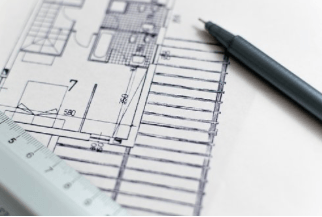
In other words we take your dream from its raw abstract form and begin to turn it into a well-thought-out tangible work of world-class fine art. Our ultimate goal is to establish, further develop, and work through the formal qualities of Fine Art, such as: gesture; scale; concept; unity; materials; engineering; relationship to the viewer; dress/attire; base; context; lighting; site location; base design; historical accuracy, etc.
Next we let the art organically evolve, then edit to perfection. This is the place to make changes-while everything is still merely on paper, and can quickly, and easily be altered. Throughout the process we anticipate and welcome your feedback so you get to be involved as the piece evolves to a place of fruition.
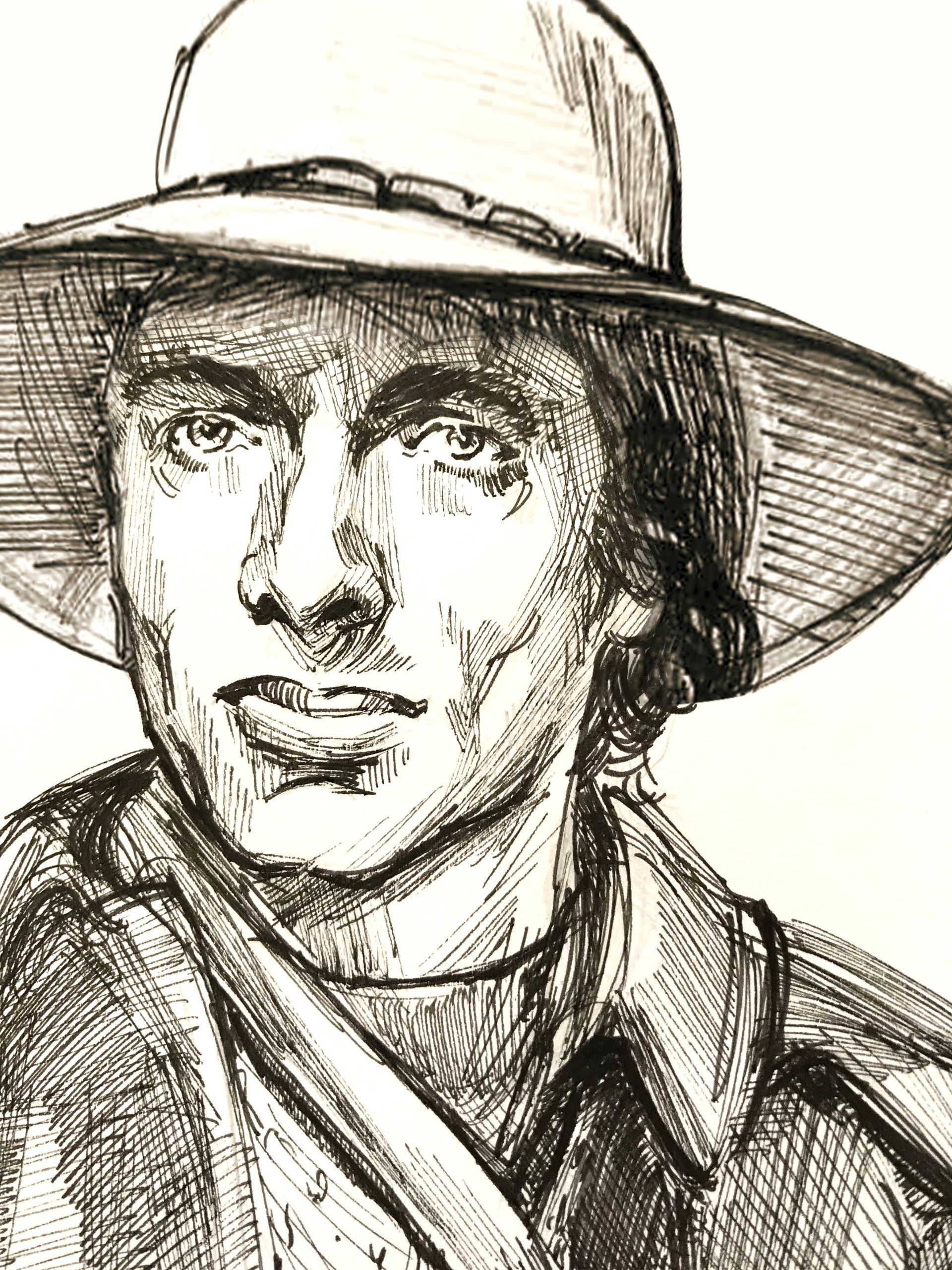
Our sketches below were based on a great deal of historical research, nearly ten meetings with the town's memorial commission, and individual interviews with experts, specializing in period garb, in order to ensure the historical accuracy of elements such: style hat; hair length; and specific details of all clothing, buttons, straps, etc.
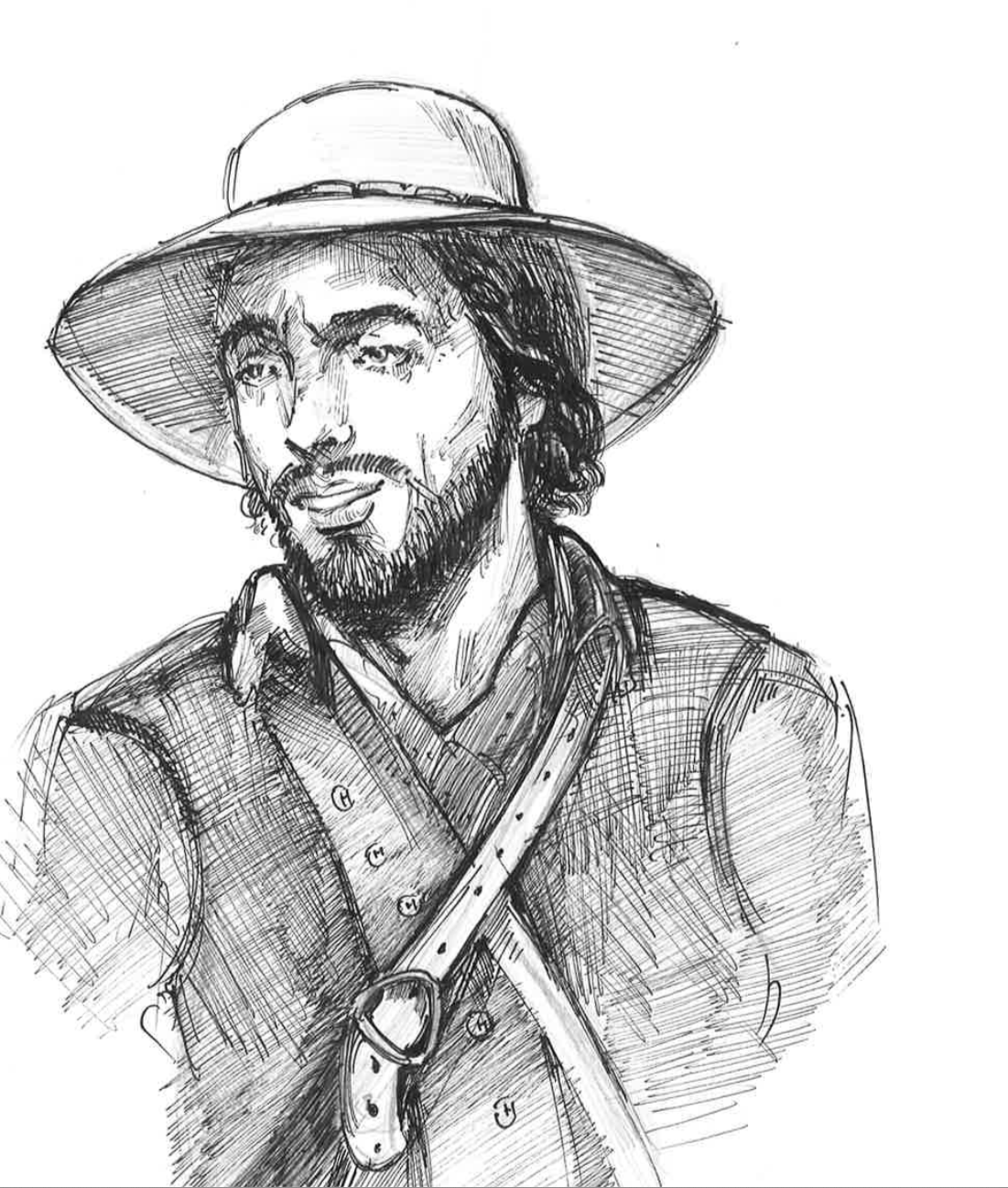

The pre-scale-model renderings, above and below, were all based on a great deal of historical research, meetings, photoshoots, and interviews.
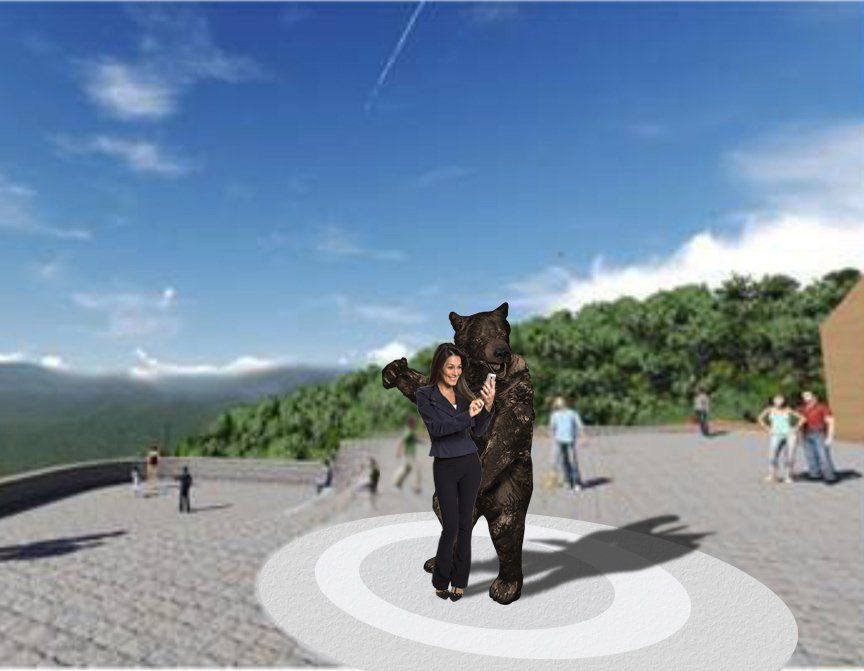
This bronze bear statue was for a scenic overlook site in a state park. Note that in today's day and age it is fairly common for spectators and visitors to use public art as a photo opportunity, so we generally take that modern phenomena into consideration during the planning phase, hence the selfie.
Graphic renderings are where we begin to work through scale issues as well (below). It is important to take the context of the sculpture into consideration. In other words, understanding the relationship between the sculpture and where it will be installed. If, for example, the site has a sky-scrappers or huge bridge behind it, as a backdrop or sorts, then we might increase the scale of the sculpture to 1 1/2 times life size, or even to twice life size, to keep it from being "dwarfed" by the site's surroundings. If necessary, to get this right, we sometimes literally use a cardboard cut-out of the sculpture's rendering that is scaled to different heights and take those cardboard mockups to the actual site, for scale studies. Like we said earlier, we are sort of old fashioned that way.
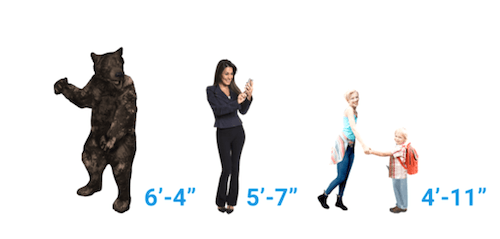
We also consider the scale between the piece and its viewers within the context of the site.
After all of that is worked out in two-dimensional sketches or graphic renderings, the next step is an exciting one: for us to create a small scale model, made of clay. This is called a maquette, which is a small-scale model of the sculpture made of clay, as can be seen in the examples below.
Creating High-End Bronze Statues from Start to Finish
The image on the left below shows the scale clay model for Forest Boone's Leap of Faith bronze statue. Next to the small version, modeled in clay, is the final large-scale bronze sculpture. See how the two look nearly identical? That is no accident. The idea is that you, the client, gets to give input at the small-scale model stage, while it is still quick, easy, and cheap to make changes, in order to ensure that you are 100% satisfied before that little clay maquette is enlarged and cast in bronze.
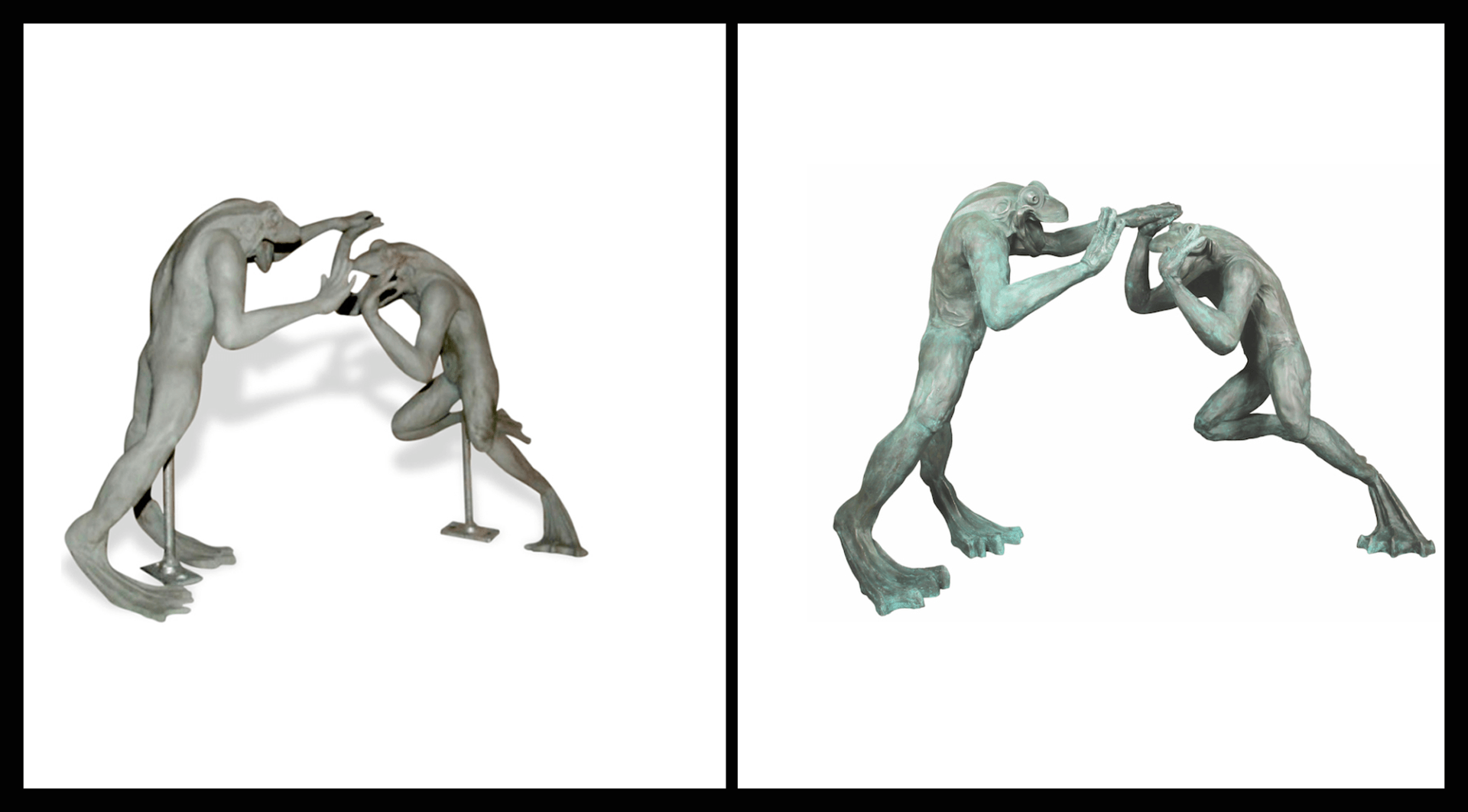
This image above shows the two original small (1/7th scale) clay frogs sculptures in full gestural form, on the left. We sculpted this two-part clay model at 1/7th scale. Shown on the right are the large-scale frogs, personified, in bronze, seven feet tall. The client wanted a green [patina] finish rather than the traditional golden brown bronze color, since frogs are usually green, when found in nature. We chemically heat treat your bronze statue, in order to color it, achieving virtually any color imaginable. The color is permanent. So that color is stable under the sun's ultra violet light, as well.
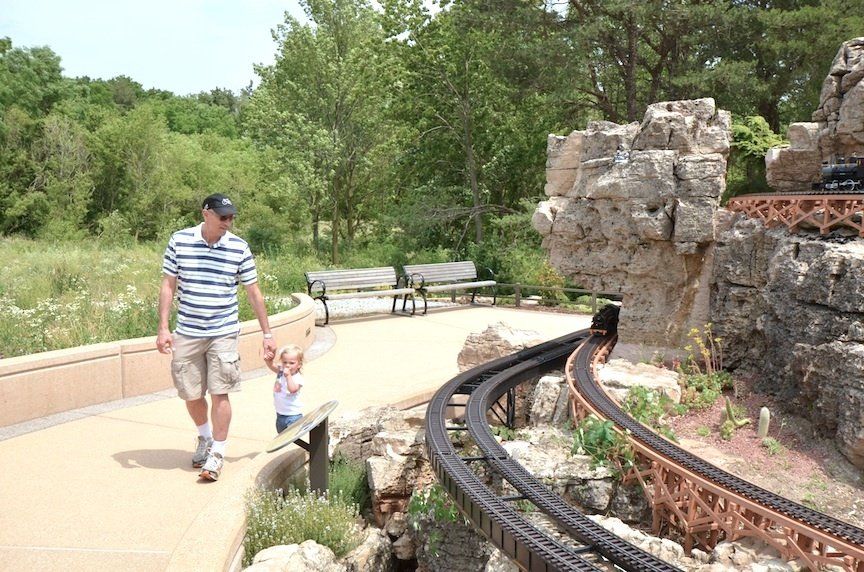
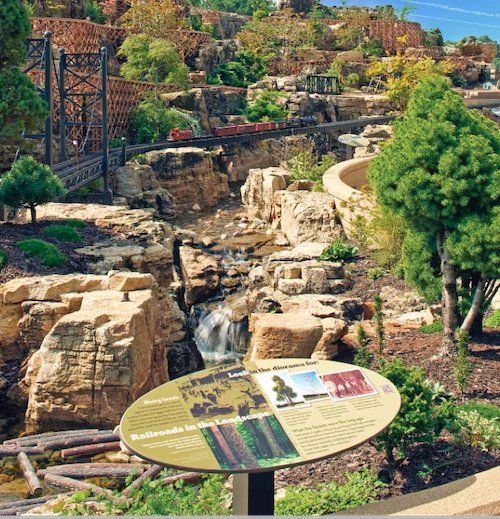
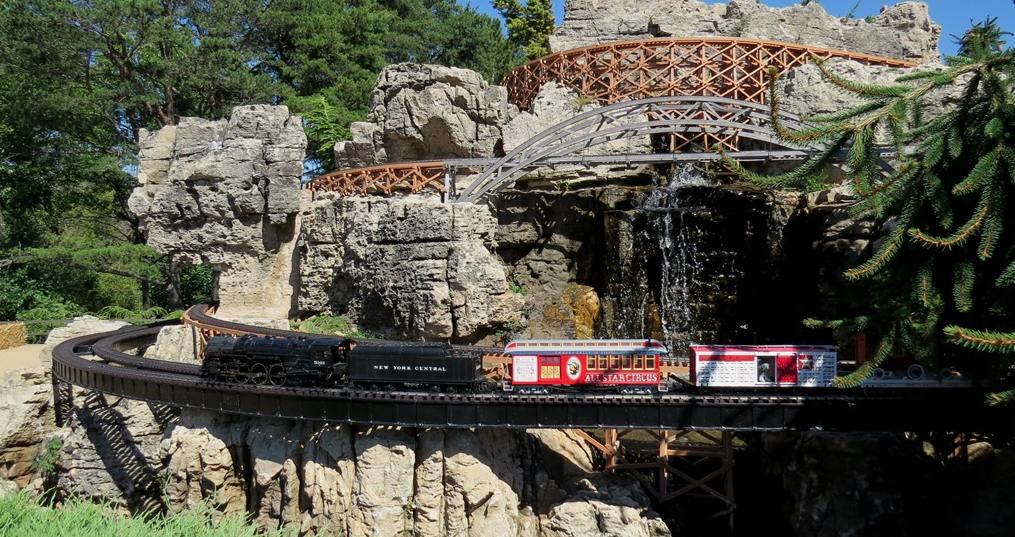
Next, you see the four foot by eight foot scale model (in this case, made of wax) for the Taltree Arboretum and Railway Garden in Valparaiso, Indiana. Forest was hired to work closely with a team of engineers, landscape architects, contractors, and volunteers for about a year to design all of the waterfalls, stream beds, mountain peaks, talus slopes, truss systems breaks, and tunnels for this site-specific-installation piece. Then the actual installation realized from the wax model.
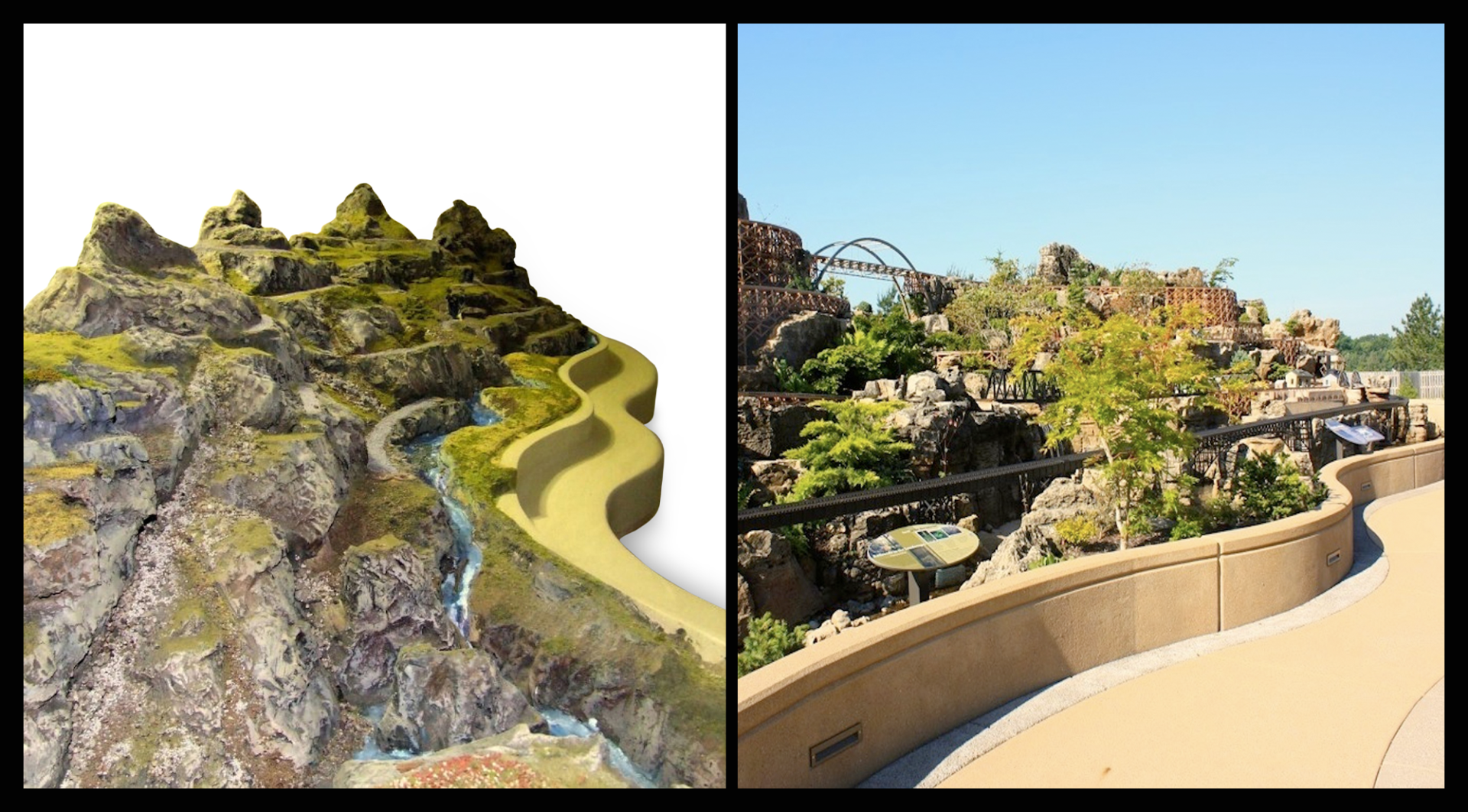
Boone created everything at 1/12th scale.
The physical model he made built everything to scale, on site, as you can see in the comparison image above.
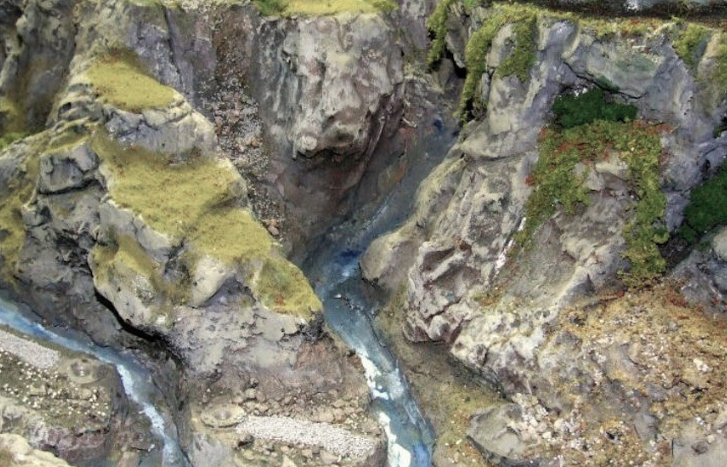
If you consider the detailed image of his wax version below, you can easily see how that was realized large scale.
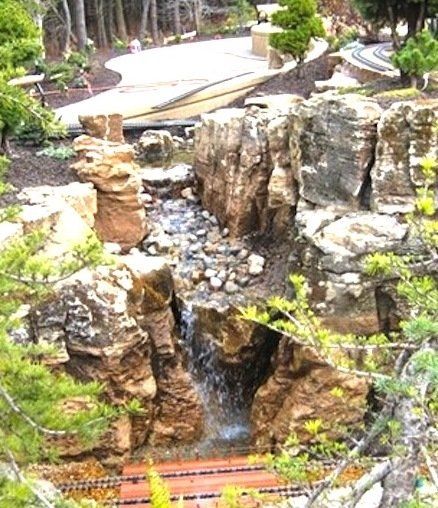
The large scale version is fully operational at the museum and complete with a number of miniature working trains, miles of train tracks, ravines, and numerous vignettes throughout the installation.
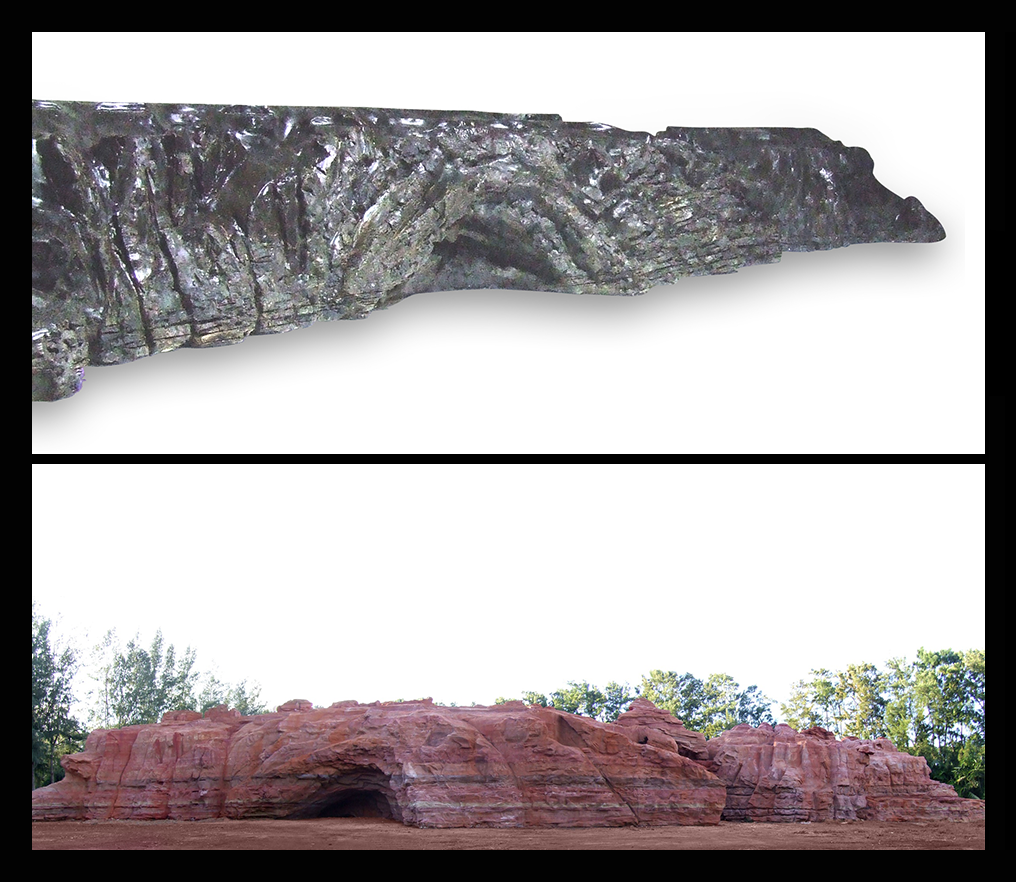
Next shown is the 13-foot wax model we made for what is called an escarpment. Think of it as a small mountain with a dead-end canyon. This was based on Forest's original pencil sketch. The after image to the right of the wax model shows the finished piece, which was 136 feet long and required over 12,000 pounds of internal reinforcement bar (epoxy coated for lifetimes of non-rust), and 8,000 pounds of colored pigment.
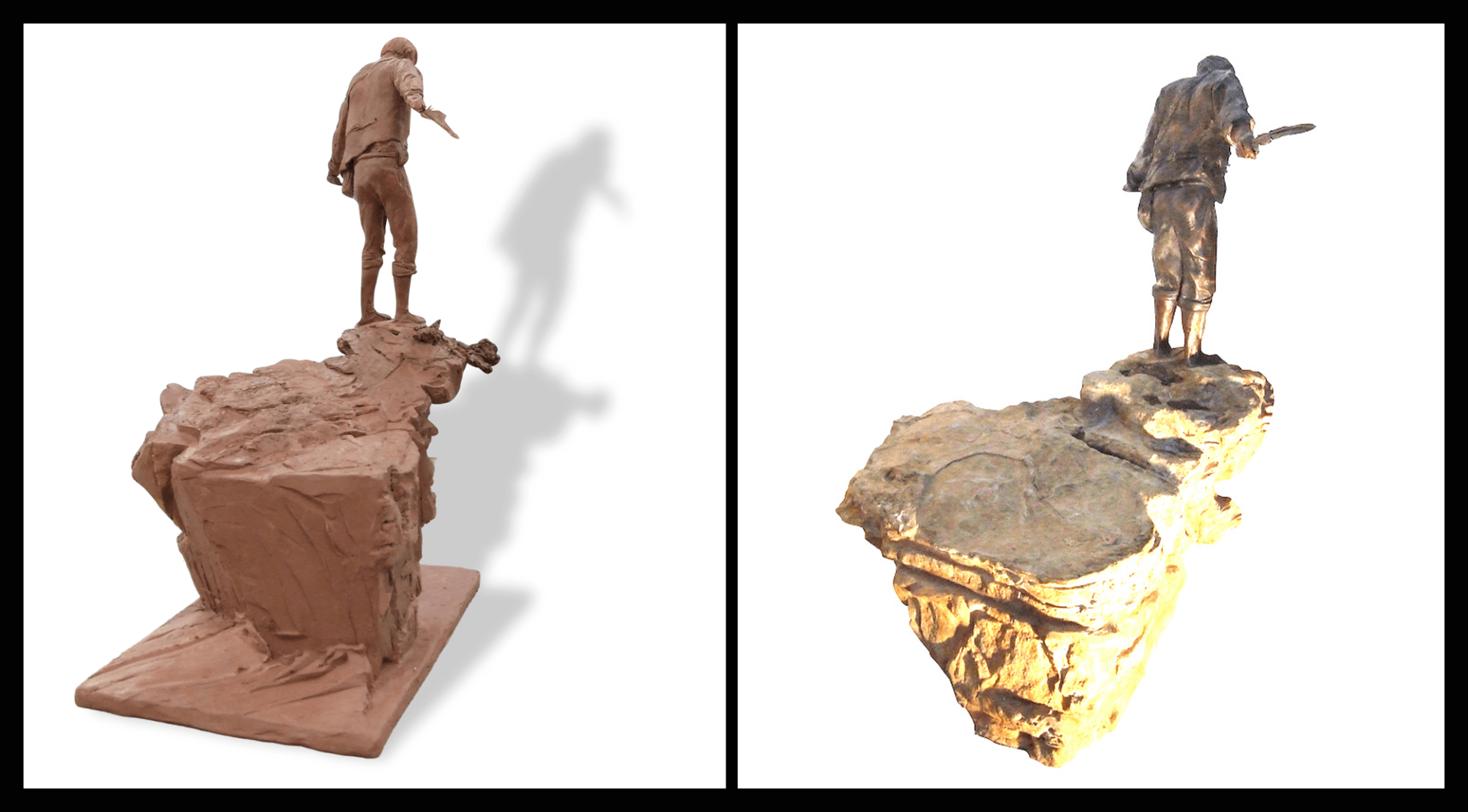
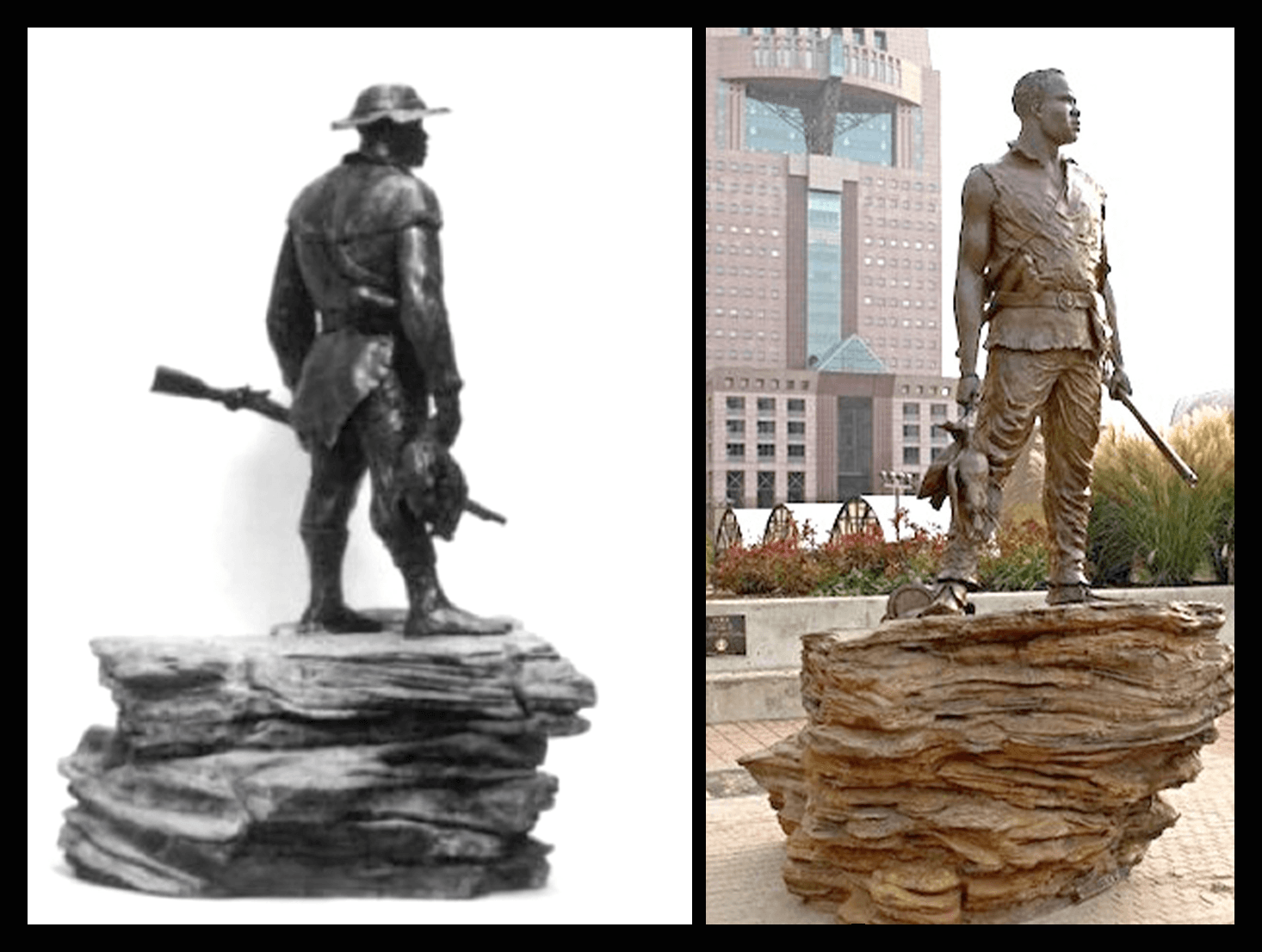
Below is the small scale model of Lewis and Clark's slave, York, that went with them on the expedition across the country, and was originally from Louisville, Kentucky. It is followed by the fully realized sculpture. Forest and Ed collaborated on this piece which is another example of stone and bronze working together.
The 32,000 pound monolithic sculpture, upon which York is perched, provides a cliff-like context for the bronze, emphasizing the rugged exploration of untamed lands. The statue of York on the base overlooks the Ohio River in downtown Louisville, and appropriately faces West. If you imagine this same sculpture on a square block of granite, would that not considerably weaken the power of the sculpture?
Lastly, here is their collaborative Abraham Lincoln memorial, modeled in clay. The idea behind this design was to have the large-scale bronze and stone version of Lincoln down near the earth, with an open-armed gesture, inviting spectators to "step on up" the tiered stone base, to sort of sit in the lap of justice and equality as Lincoln was "a man of the people." The laser engraved granite behind Lincoln credits him for his now-famous quote, so it is only fitting that rather than towering above the on-lookers in an intimidating way, he instead invites them to "sit a spell."
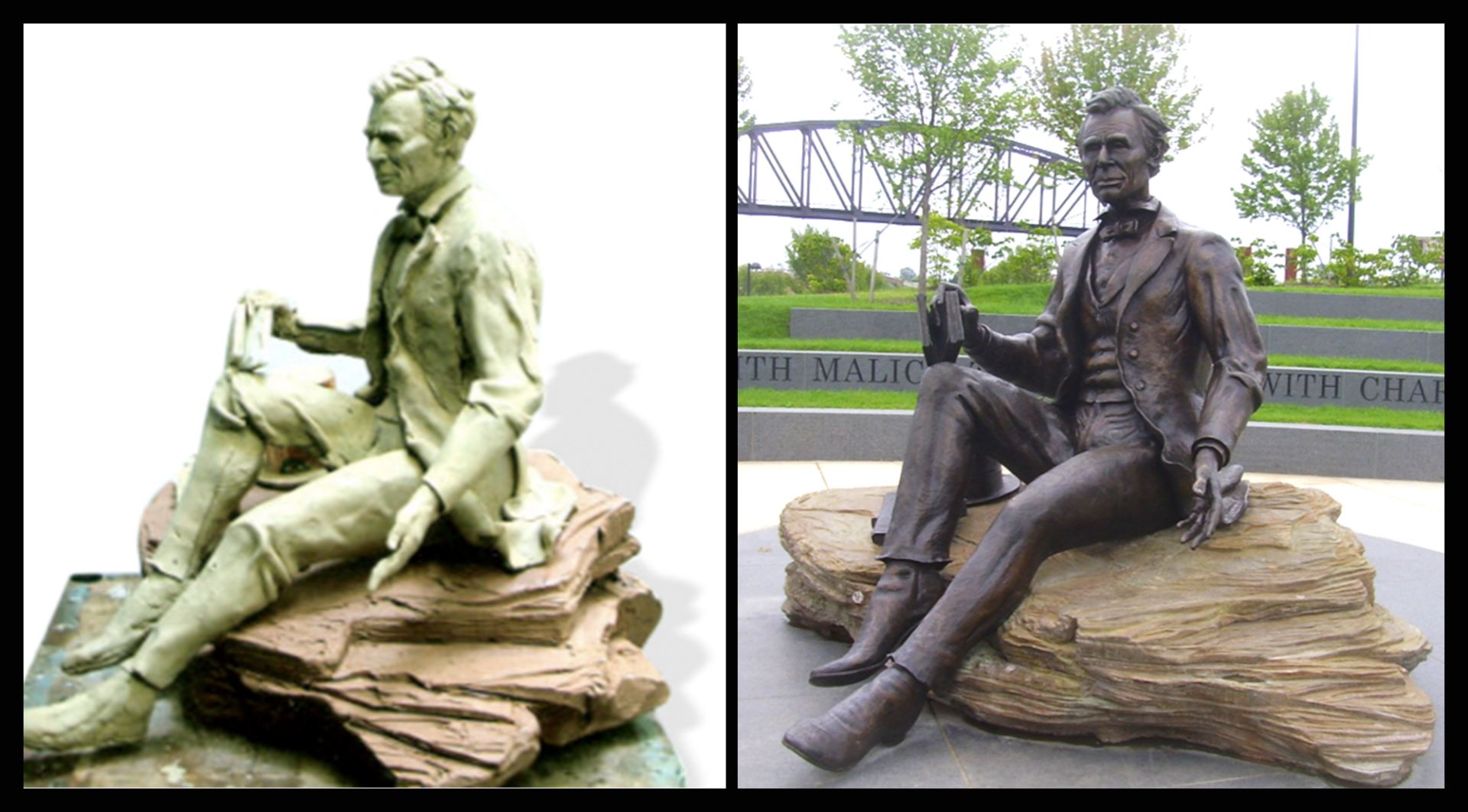
So, just to recap, the before and after images above have been the small scale model phase which follows the sketches and initial conceptualization. We go to any length to push each sculpture design to a place of excellence.
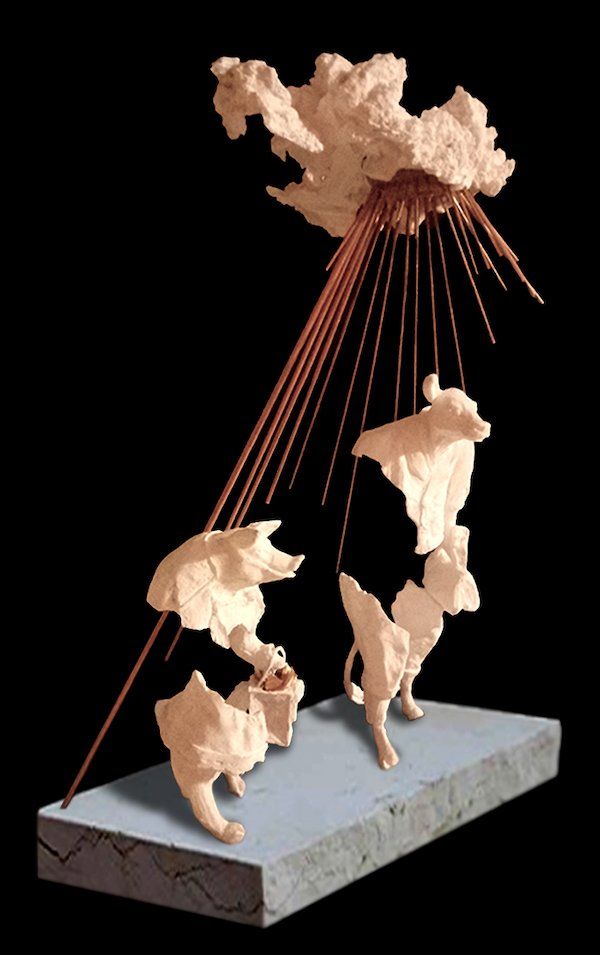
As you can see below we started out with solid figures to be cast in bronze - the cow and pig
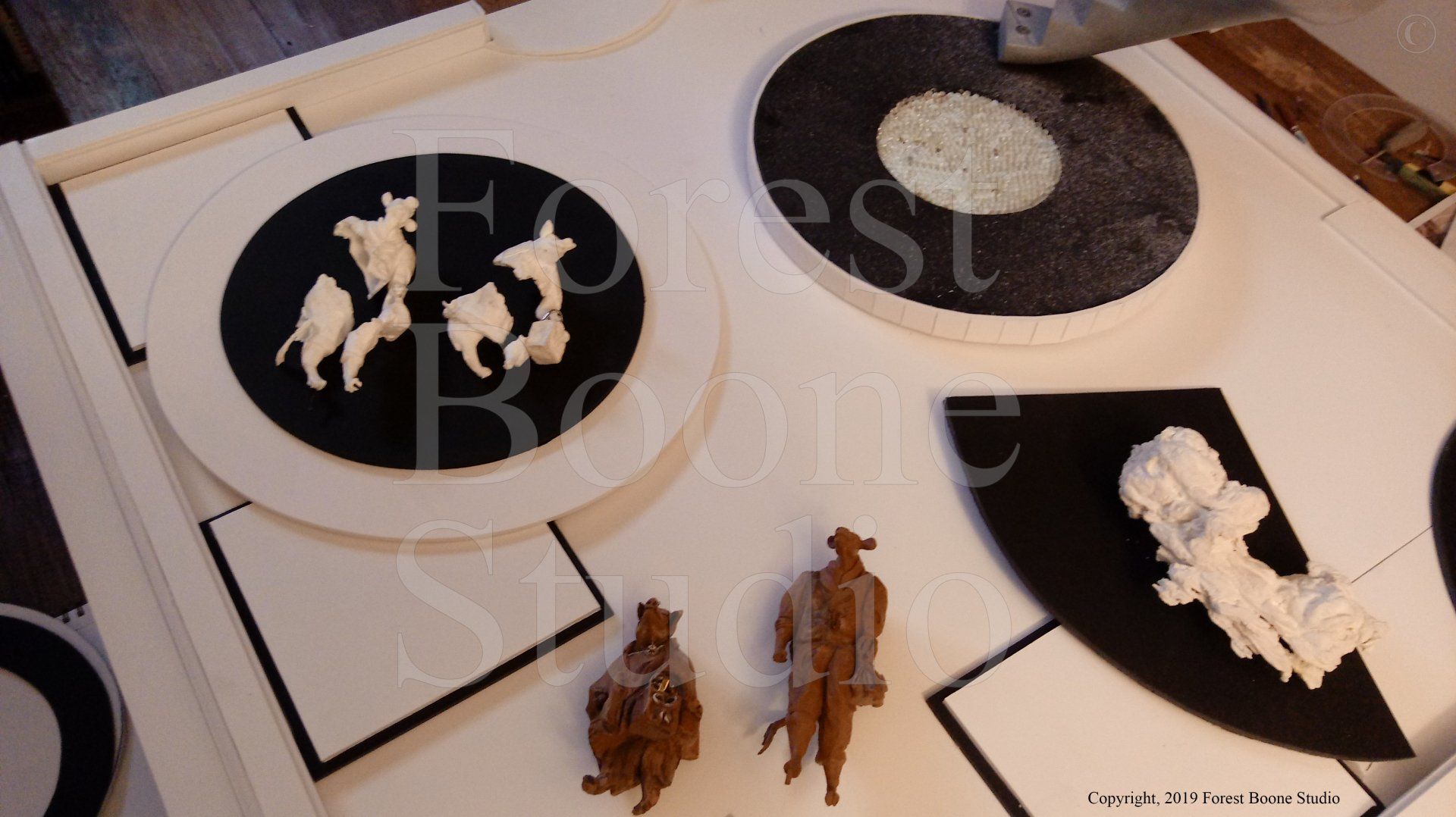
After perfecting the design, we ended up with the lighter, more ethereal, almost ghost like versions of the sculpture which strengthened the overall concept, since these were prototypes (or maquettes) for an outdoor large scale bronze animal memorial for the University of Louisville School of Medicine.
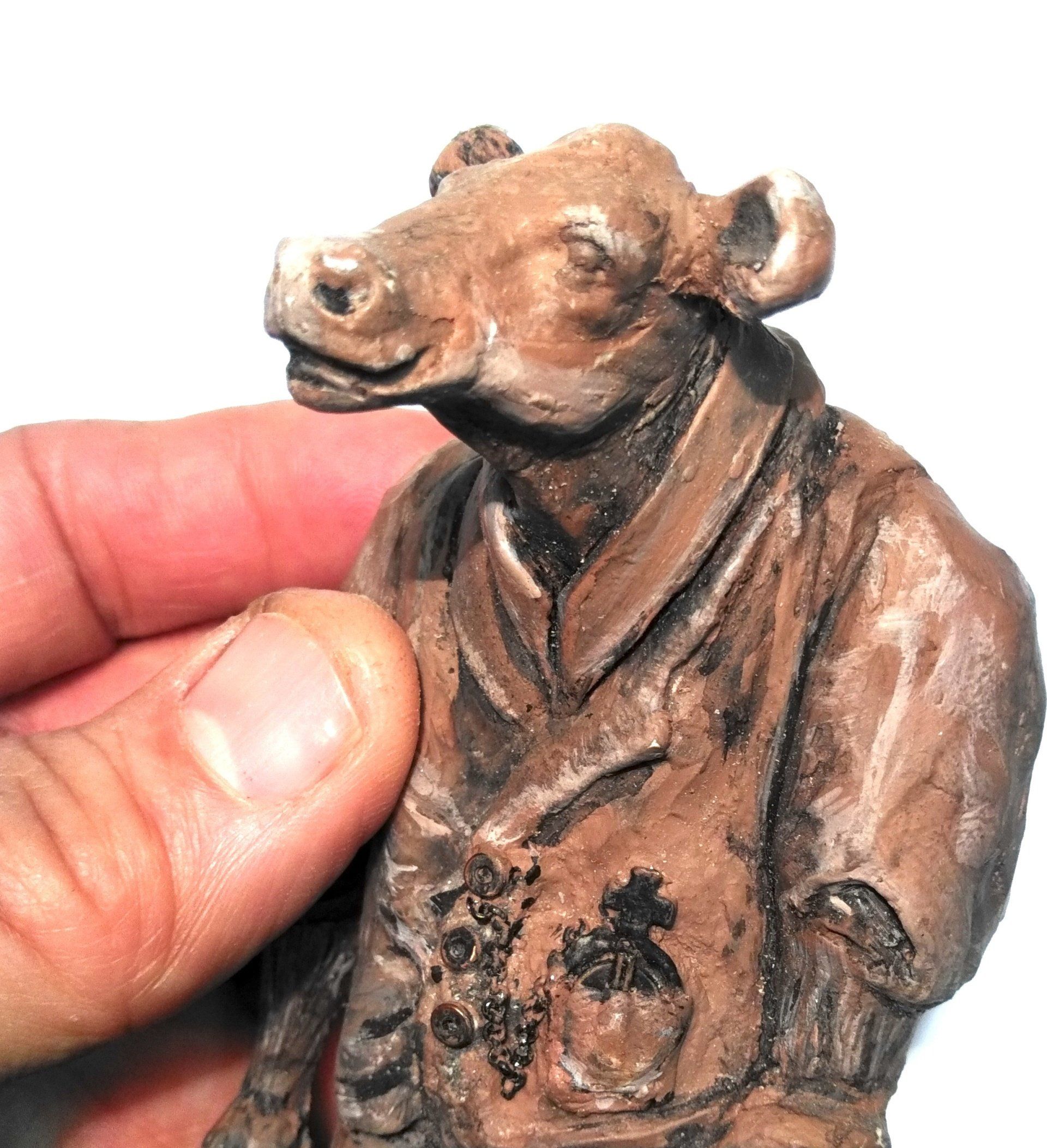
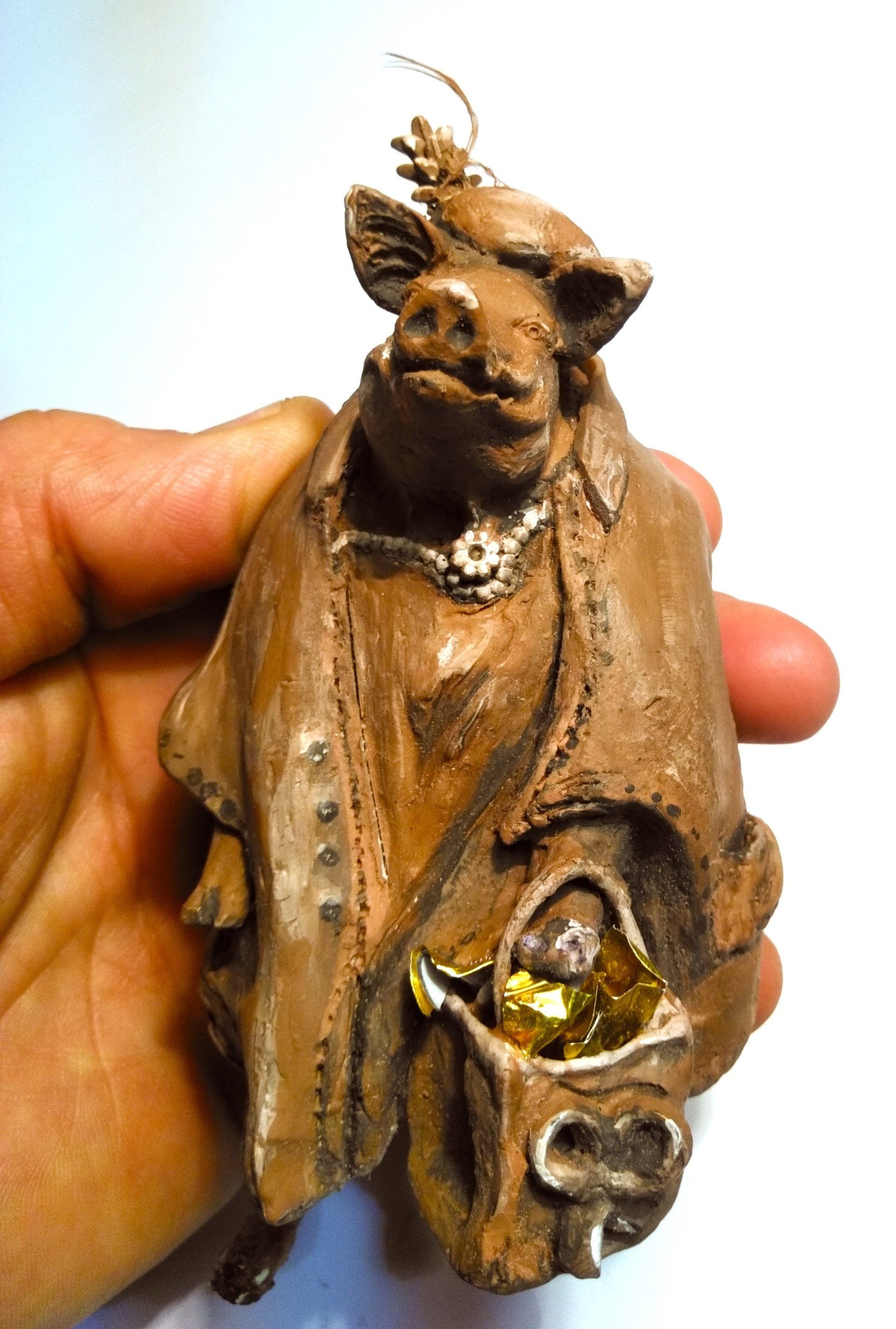
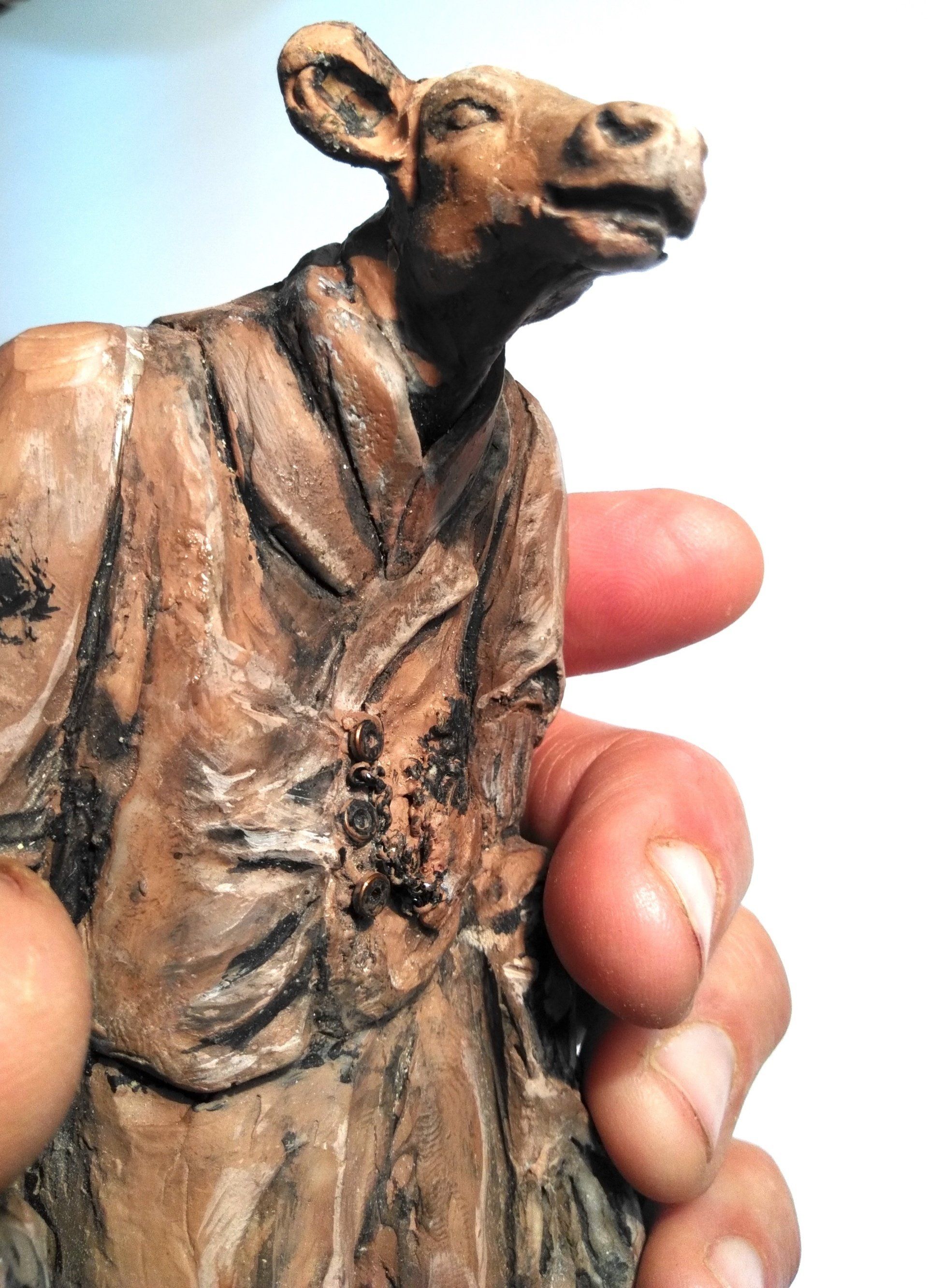
After you, the client, is 100% satisfied with the scale model we can then begin sculpting the piece in clay, at actual size and likeness of the sculpture which eventually ends up in bronze.
Forest Boone Studio’s Change Order Policy for 2-d Renderings, Small Scale Maquettes and the Large Scale Clay Sculpture
It is our policy to allow one MINOR CHANGE or even one small set of minor changes to the original order after the 2d rendering (or cardboard mockup). This applies to changes to the 2d rendered file as it is designed, decided upon, and the order placed for the maquette.
Forest Boone Studio Change Order Policy
Because this usually happens after meetings, discussions, telephone calls, text messages, email messages sent, a sketch or sketches, discussions, photos referenced, and/or sometimes even historians consulted, the appearance of the maquette (small scale clay model) is decided upon and agreed upon by everyone, there are plenty of opportunities to be crystal clear on what the sculptor is about to create for you. We are so thorough in implementing all of the above strategies/methods of approach, everyone involved needs to be clear on what is being ordered, what is expected, and precisely what our clients will receive.
Additionally, the sculptor, after the 2-d rendering is approved, the sculptor will begin sculpting the requested embellishments, if any, that accompany the model (ie.,books, bags, pipes, keys, guns, glasses, wildlife, etc.). Because considerable research, time, and energy go into each and every design decision and because all sculpting is painstakingly executed by hand, IT IS STRONGLY ENCOURAGED THAT A CLIENT OR COMMITTEE BE FIRM WITH THEIR RESPECTIVE SECONDARY ELEMENTAL DECISIONS.
Minor Change Orders to Maquette
With quality craftsmanship and customer satisfaction in mind, Forest Boone Studio extends the right of the client to MAKE ONE MINOR CHANGE ONLY, TO THE CLAY MAQUETTE, in order to ensure the CLIENT IS happy with the final product, before that MAQUETTE is converted to a LIFE SIZE CLAY SCULPTURE.
For example, a client may request minimal changes to apparel or sets of apparel changes after a new and rare historical photograph was discovered along the way. So then a small set of apparel changes might be: a pocket added to a shirt, and the shoes of the subject instead have buckles, rather than laces. These are minor changes and can be made fairly quickly without a great deal of time, as a courtesy extended by the artist. Just as these apparel changes are considered minor changes, slight changes to the human figure are allowed at one point in the process, but only one point in time throughout the process, and need to be submitted by the client, in writing. Some examples of what are considered minor changes to the human figure would be: the nose needs to be a little smaller and narrower; the feet a light larger; chest hair added; the hair longer and straighter; the hair parted in the middle rather than the side; etc.
Major Change Orders to Either the SMALL SCALE MAQUETTE OR LARGE SCALE CLAY SCULPTURE
MAJOR CHANGES that affect the pose or gesture of the human or animal figure cannot be easily made. With the human figure, as part of an educated and professional sculptor’s formal training is what is referred to in Greek statuary as “weight shift.” This relates directly to the pose of the animal or the human figure, particularly if the subject has a spine. (refer to “Greek statuary weight shift” for more on this). If the weight shift is affected by a change order, and that change is insisted upon, then the sculptor has the right to either refuse the change order, or charge for an altogether EQUAL TO THE ORIGINAL MAQUETTE FEE.
IF a MINOR CHANGE TO THE LARGE SCALE CLAY FIGURE IS REQUESTED then that will be done at no additional cost to the client. If, however, a MAJOR CHANGE is requested to the large scale clay figure, Forest BooneStudio has the right to reject that MAJOR CHANGE with impunity.
In other words, once the pose of a figure is determined it is nearly impossible to CREATE A MAJOR CHANGE to the sculpture without changing the entire sculpture or statue. Otherwise, the statute will never look natural.
One last example of this is if a human figure is sculpted standing on a sloped cliff (see York statue, Louisville, Ky 2004 by Ed Hamilton and Forest Boone). This is a naturally occurring human reaction, based on human anatomy, equilibrium, etc. The “sitter” (a name for the person we sculptors get to pose), will naturally lock their legs or lean forward. They will pose this way, in order to keep their balance. It is just human nature. So then, if a figurative maquette was suddenly, after the bulk of the scale model had been sculpted, requested by the client, to be moved from standing on a sloped rock to a standing on a flat rock, for example, that would definitely affect “weight shift.” And because weight shift would have been affected, the posture of the human figure would, in this case, need to be changed, at the hips, the neck, the legs, the shoulders. etc., due to his/her center of gravity being affected by this type of requested change. This type of change, for example, is considered a MAJOR CHANGE and would require an altogether NEW LARGE SCALE CLAY SCULPTURE TO BE CREATED, RESULTING IN A $25,000 CHANGE ORDER FEE.
Additional Supplementary Changes to the Maquette
Changes that result in an official change order, ABOVE THE ONE MINOR CHANGE allowed to the scope of the original MAQUETTE order will require an invoiced amount of $2,500 to begin those changes to the maquette. Once we receive the payment of that change order fee and the change order in writing, we will then schedule that computer time into our production schedule.
Forest Boone Studio reserves the right to determine if it is a MAJOR VERSUS A MINOR CHANGE being requested, based on our professional standards of excellence and what is described in explicit detail, herein. We do so to protect not only the integrity of the final product but to ensure our customers’ ultimate satisfaction. If we treated a major change to a pose which affected the weight shift, for example, without changing the pivot on the hips, the ankle joints, the twist at the waist, etc., you, as the client, would not be pleased with the stiff and unnatural figure that resulted. That will not happen so it is best to simply pay for a change order to the 2d rendering file and have the figure turn out to be a world class piece.
The $2,500 change order fee we charge TO CHANGE THE SMALL SCALE MAQUETTE, if it does come down to that, is a negligible fee, comparatively speaking, and will be well worth the money and your resulting satisfaction.
We, at Forest Boone Studio, promise to make the determination between Major and Minor changes with honesty and integrity.
Thank you for choosing Forest Boone Studio and we look forward to working with you on your project!